

Eight+ years of service life in extreme heat and UV exposure
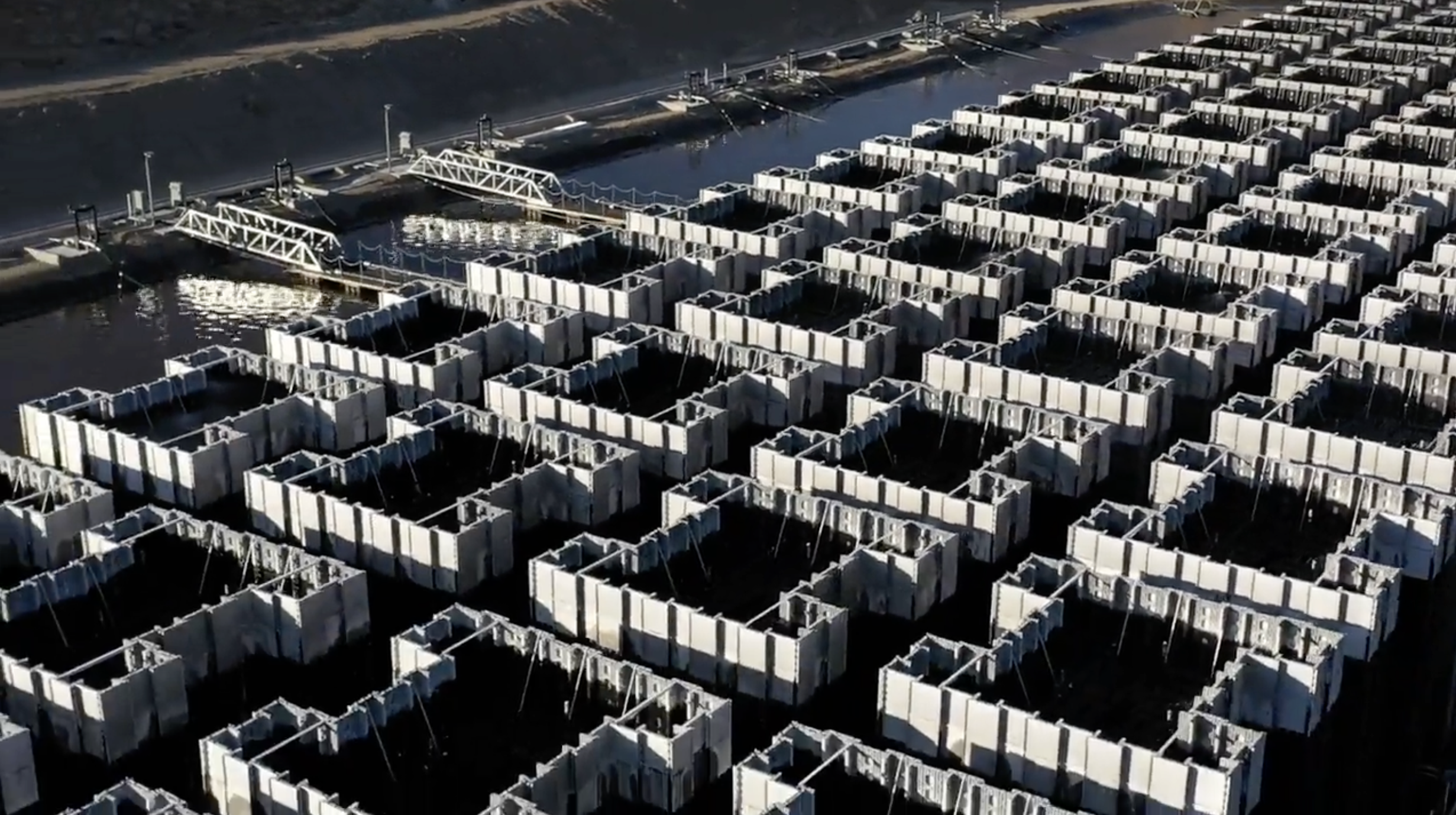
This operator chose Ecovap because it’s engineered to operate for 50+ years in conditions that destroy conventional wastewater systems
Most wastewater infrastructure eventually starts failing from exposure. Heat weakens materials. UV radiation breaks down surfaces over time. Wind creates mechanical stress. Temperature swings accelerate cracking and degradation. In extreme climates, operators are managing material failure on top of wastewater elimination.
That was the reality at this long-running Ecovap deployment. It’s located in one of the hottest, highest-UV operating environments in North America, where summer temperatures regularly exceeded 115°F and the site experienced periodic high-wind events. And in winter, temperatures dropped below freezing.
But the system never operated under sheltered conditions. Instead, it sat fully exposed year after year.
For operators considering passive evaporation, durability matters just as much as evaporation performance itself. Replacing degraded components in remote environments creates maintenance costs, operational interruptions and long-term reliability concerns that quickly compound over time. And performance only worsens in systems that rely on exposed plastics, nozzles or mechanical spray equipment.
They needed a solution designed for continuous environmental exposure, not temporary field performance.
Choosing a water management system built for long-term UV and heat exposure
The Evaporation Matrix™ is constructed primarily from HDPE, the same material widely trusted for produced water ponds, mining tailings facilities and industrial wastewater containment systems.
Ecovap integrates carbon black directly into the HDPE structure to improve UV resistance and increase long-term durability under sustained sunlight exposure. The result is a matrix designed specifically for outdoor industrial operation in harsh climates.
And after more than eight years in service, the system has shown no cracking, sloughing or visible material degradation across the HDPE matrix panels that make up the overwhelming majority of the structure.
The same design philosophy extends throughout the rest of the system.
How the DICE SuperStructure™ makes long-term outdoor operation possible
The DICE SuperStructure is Ecovap’s proprietary structural framework — the engineered skeleton that holds the Evaporation Matrix™ together across large-format outdoor installations. Ecovap designed it to solve a physics problem that most passive evaporation systems never address: HDPE expands and contracts significantly with temperature, and in an environment swinging from below freezing in winter to over 115°F in summer, that movement is substantial. A large-format installation without a managed solution would buckle, distort or progressively pull apart at connection points over time — one of the primary reasons conventional wastewater structures fail in extreme climates.
Managing thermal expansion
The DICE Superstructure addresses this directly. Its dynamic interlocking architecture allows individual panels to expand and contract thermally within the matrix. Critically, that movement doesn’t propagate to the outer perimeter, so the installation’s footprint does not grow or shrink over time. The design absorbs and distributes expansion internally, rather than letting it accumulate as stress at fixed connection points or dimensional change at the structure’s edges. This is what makes a permanent, large-format HDPE installation viable in extreme environments.
Ecovap selected piping, clips and structural components specifically for high heat and UV durability. Stainless steel and aluminum replaced weaker alternatives in exposed areas. Rewetting relies on low-pressure circulation instead of high-maintenance spray systems that commonly fail in extreme outdoor conditions.
Ecovap keeps running without turning into a constant maintenance project
The result is a passive evaporation system that continued operating through years of heat, UV exposure, high winds and seasonal temperature swings without creating new maintenance burdens for the site.
That changes the economics of passive evaporation over time. In remote industrial operations, reliability matters just as much as raw evaporation rates. It’s the systems that survive harsh conditions without constant intervention that become operational assets.
8+ years of successful continuous outdoor operation
115°F
successful operation in extreme heat
0
visible HDPE cracking or sloughing
50+
year design life in the field
Make long-term durability your operational advantage
Let’s work together to help you avoid the maintenance cycle merry-go-round.