

When an Evaporation Deficit Demanded an Independent Answer, Ecovap Came Out on Top
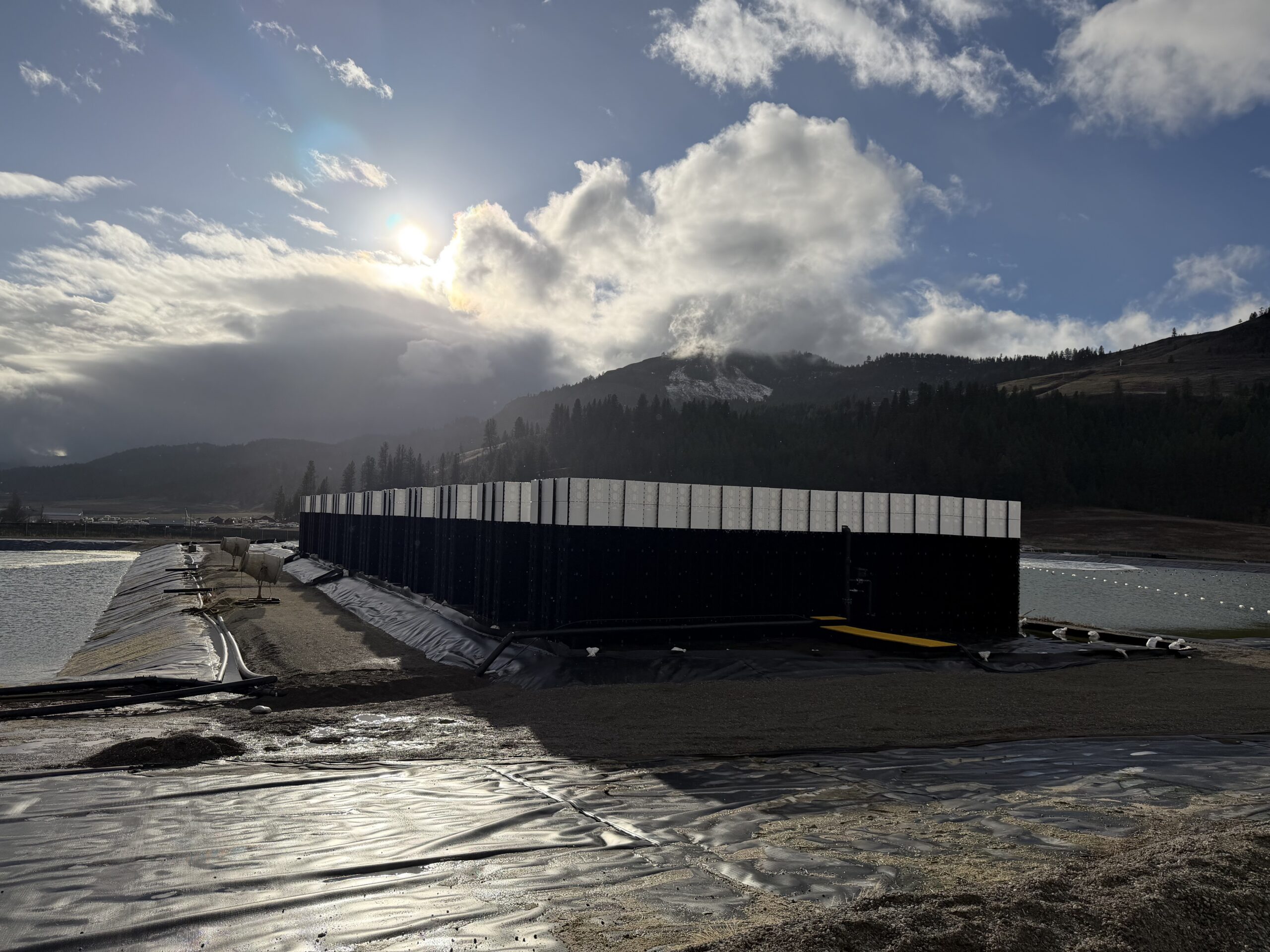
A third-party evaluation of three evaporation technologies at an active mine site found that Ecovap™ scored highest overall and cut annual operating costs by double digits compared with every other alternative.
Five lined ponds. Two water treatment plants. 13.9 million gallons of reverse osmosis brine a year, and nowhere left to put it.
The existing spray evaporators couldn’t keep up. Wind limited them. Temperature limited them. Brine started getting trucked to a tailings storage facility instead — a stopgap, not a fix.
That’s not a plan. That’s a system out of runway.
So the operator brought in an independent engineering firm to close the gap for good: a projected 3.0-million-gallon-per-year deficit, solved in a way that would hold for the next 15 years of mine life.
The firm didn’t take vendor evaporation technology claims at face value
Yes. And you don’t have to take our word for it. Like many Ecovap clients, this company They built a water balance model. They calibrated it against three years of real operating data. Then they scored three long-term technologies — Ecovap™, wind-based evaporators and rapid mechanical aerators — against nine weighted criteria: evaporation capacity, capital cost, operating cost, schedule, permitting, flexibility, space, energy and safety.
The result wasn’t close.
| Critera | Ecovap | Wind-based evaporators | Rapid aerators |
Weighted evaluation score | 4.3/5 | 2.84/5 | 3.87/5 |
| Annual operating cost | Lowest | 88% higher than Ecovap | 81% higher than Ecovap |
| Upfront capital cost | Mid-range | Higher than Ecovap due to secondary containment costs | 55% lower than Ecovap |
Ecovap scored highest overall. Not the lowest sticker price; rapid aerators needed less upfront capital. But the widest margin on the number that compounds most over 15 years: operating cost. That combination is what drove the top score.
Why Ecovap won
A dramatically lower operating cost. One low-horsepower pump (2–10 hp) moves water across the Evaporation Matrix™ — the HDPE structure at the center of the system.
No constant spray, high-power aeration, chemicals or cleaning regime.
The Evaporation Matrix’s HDPE surface stays continuously wetted, so solids wash back into containment instead of building up on top. The evaluators didn’t recommend a cleaning regime for Ecovap at all.
Wind-based evaporators didn’t get the same pass because the evaluation flagged a real risk of calcium sulfate scaling in high-sulfate brine, the kind of buildup that can mean acid or clean-water rinsing just to keep the system running.
Installation flexibility also fit the site as it stood. No new secondary containment, which hit the wind-based evaporator’s estimate hard. By contrast, Ecovap went straight onto ground the operator already had: already compacted, already lined, between the existing ponds.
It’s built for maintenance access, too. OSHA-rated walkways mean site personnel can service the system without special equipment or scheduling downtime around confined-space protocols.
Which numbers can you actually bank on?
A weighted score is only as good as the confidence behind it. Look at how each evaporation estimate was actually derived, and the gap widens further.
Ecovap’s number came from vendor-quoted performance for a specific system size, backed by documented experience treating mine waters elsewhere. The one open question — how the Matrix handle this site’s particular water chemistry — is exactly what the Validation Phase exists to answer because it’s narrow, well-defined and testable.
The wind-based evaporator’s own vendor hedged their quote. The evaporation figures were explicitly labeled an “ideal” case, with a separate warning that this site’s water chemistry, gypsum, silica and other dissolved solids would pull real performance below the quoted numbers. The evaluators flagged the same risk independently: calcium sulfate scaling, likely within a few years, in high-sulfate brine like this site’s. Two sources. Same warning.
Rapid aerators carried the widest range of uncertainty of the three. The evaluation’s own estimate for aerator-driven evaporation spanned 0.32 to 1.0 million gallons for the same test period. The top end was more than 200% above the low end. That’s what happens when you test a technology for a job it was never built for. Aerators evaporate water as a side effect, not a design goal. The evaluation’s own table calls rapid aerators the least-proven evaporation technology in the group.
Put simply: Ecovap’s numbers came from a vendor describing what the technology does by design. The wind-based evaporator’s numbers came with the vendor’s own asterisk attached. Rapid aerators’ numbers came from a technology never built for the job in the first place.
The outcome
The final recommendation named Ecovap as the go-forward long-term solution. Between overall evaporation capacity, low operating costs and siting flexibility, the next move was a no brainer: a Validation Phase deployment to prove out performance before investing in a full build. And thanks to Ecovap’s modular designs, more Matrixes can always go in later if the deficit grows.
For an operator staring down a hard evaporation deficit and a 15-year horizon, the math wasn’t complicated. Ecovap offered the best balance of performance, cost and operational simplicity of anything evaluated.
Proof under third-party scrutiny
Best
weighted evaluation score of the three technologies tested
88%
lower annual operating cost than the nearest long-term alternative
3M
gal/yr evaporation deficit the system was evaluated to close
Facing an evaporation deficit an off-the-shelf fix can’t touch?
Get an independent look at how Ecovap compares for your site.